 Skip to content
Commercial Roof Coatings in Shreveport, LA
Silicone and acrylic roof coatings that seal, protect, and restore your existing roof without a costly tear-off
Shreveport Roof Coatings: Silicone & Acrylic Systems
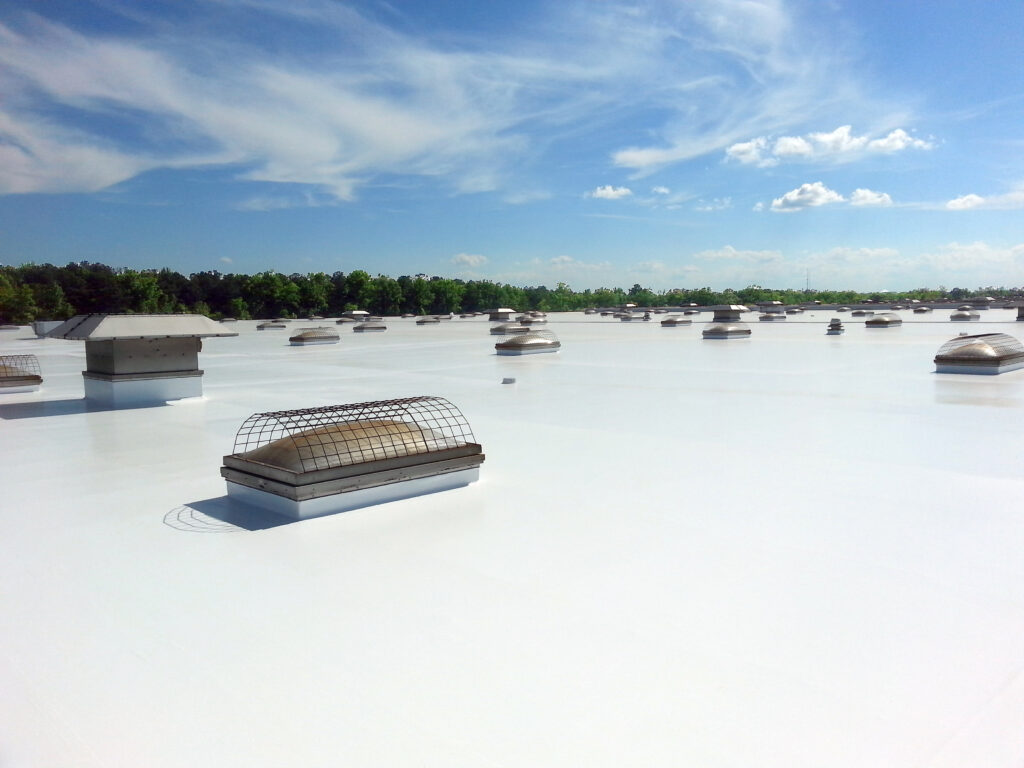
A roof coating is a liquid-applied waterproofing system — typically silicone or acrylic — rolled or sprayed directly over an existing flat or low-slope roof. It cures into a seamless, fully adhered membrane that seals existing leaks, reflects UV, and extends the life of the roof beneath it by 10 to 20 years without requiring a tear-off.
Coatings are most commonly applied over aged TPO membranes and modified bitumen systems — two of the most prevalent roofing types on Shreveport’s commercial and multifamily building stock — but they’re compatible with most flat roofing substrates in sound condition. The coating doesn’t replace the base membrane. It restores and protects it.
For the right roof, it’s one of the most financially sound decisions a commercial property owner in Shreveport can make. A coating system typically costs 40 to 60 percent less than a full replacement, qualifies for favorable tax treatment under Section 179, eliminates tear-off and disposal costs entirely, and delivers manufacturer-backed warranties of 10, 15, or 20 years.
Hodge Roofing installs silicone and acrylic coating systems on commercial buildings, multifamily properties, and residences throughout Shreveport, Bossier City, and the Ark-La-Tex. Every project starts with a professional inspection to confirm your roof is a legitimate candidate — because a coating applied to the wrong roof isn’t a solution, and we’ll tell you that honestly.

Why A Roof Coating May Be The Right Move For Your Property
For a qualifying roof, the financial and operational case for coating over replacement is difficult to argue against. Here’s why Shreveport property owners and building managers choose restoration.
40-60% Less Than Replacement
A coating system typically costs less than half of what a full tear-off and replacement would on the same roof. On a large commercial property, that gap can represent six figures in deferred capital spend.
No Tear-Off, No Disruption
Coatings are applied directly over the existing membrane — no tear-off, no debris, no noise. Most Shreveport commercial coating projects are completed in two to four days with tenants and employees on-site the entire time.
Reflectivity Lowers Utility Bills
White reflective coatings reduce the amount of heat transferred into the building — a real, measurable reduction in cooling costs that compounds annually for the life of the coating system.
Tax Advantages
Coatings often qualify as a maintenance expense — not a capital improvement — which may allow a 100% deduction in the year of installation. A replacement must typically be depreciated over 39 years. Confirm with your CPA.
Seamless Protection
Unlike traditional systems, coatings form a fully seamless, watertight barrier that helps eliminate leak-prone joints and seams.
Warranty Coverage
10, 15, and 20-year warranties are available — registered in your name. At end of term, a recoat can renew coverage for another full period without tear-off. No other roofing system offers that.
Instead of replacing your roof, you can restore it with a seamless, energy-efficient system that saves money, reduces downtime, and keeps your building protected for years to come.
How to Choose The Best Roof Coating System
Silicone and acrylic are the two primary liquid-applied roof coating systems. Both are applied over existing flat roofing membranes. The right choice depends on your roof’s drainage characteristics, existing substrate, and budget.
Silicone Roof Coatings
The preferred system for flat commercial roofs with ponding water
Silicone is a liquid-applied coating that cures into a highly flexible, fully waterproof membrane. Its defining characteristic — what separates it from every other coating system — is that it does not degrade under standing water. Where acrylic and most other coatings will eventually soften or lose adhesion if water sits on them, silicone stays bonded and waterproof indefinitely under ponding conditions.
For Shreveport commercial flat roofs where drain capacity, parapet design, or insufficient slope leads to ponding after heavy rain, silicone is almost always the correct system. It bonds well to TPO, modified bitumen, built-up roofing, and most other sound flat roof substrates.
- Fully waterproof under ponding and standing water
- Remains flexible across extreme temperature ranges
- Excellent adhesion to TPO, mod-bit, BUR, and metal
- 10–20 year manufacturer warranty terms available
- High solar reflectance — reduces cooling load
- Future recoats require surface prep and priming
Acrylic Roof Coatings
Cost-effective restoration for well-drained flat and low-slope roofs
Acrylic roof coatings are water-based, liquid-applied systems that cure into a highly reflective, seamless membrane. They are the most cost-effective coating option and deliver strong solar reflectance — in many cases qualifying for ENERGY STAR ratings — making them a smart choice for commercial property owners focused on both budget and long-term energy performance.
Acrylic is easy to apply, bonds well to most roof substrates, and is straightforward to recoat when the warranty term ends — unlike silicone, a future acrylic layer adheres without special priming in most cases. This makes acrylic an attractive long-term system for building owners who plan to stay in a property and want a simple renewal path.
- Most cost-effective coating system per square foot
- Excellent solar reflectance — ENERGY STAR eligible options
- Easy future recoat without special surface priming
- Bonds well to TPO, mod-bit, metal, and most substrates
- 10–15 year manufacturer warranty terms available
- Not suitable for roofs with ponding water
Silicone vs. Acrylic — Quick Reference
Not sure which system fits your roof? Use this as a starting point — we’ll confirm the right call during your inspection.
| Factor | Silicone | Acrylic |
|---|---|---|
| Ponding Water Performance | ✓ Excellent — designed for it | ✗ Not recommended |
| Solar Reflectance | High | Very high — ENERGY STAR eligible |
| Cost Per Sq Ft | Mid-range | Lower |
| Flexibility | Very high | Good |
| Recoat Ease | Requires cleaning & priming | ✓ Simple recoat |
| Common Substrates | TPO, mod-bit, BUR, metal | TPO, mod-bit, metal, foam |
| Warranty Terms | 10–20 years | 10–15 years |
Not sure which applies to your roof? The inspection tells us everything we need. If your roof ponds water after rain, that alone points us toward silicone. Call us at (318) 946-8093 and we’ll talk through it.
What Are Coatings Applied Over?
Silicone and acrylic coatings are restoration systems — they’re applied over an existing roof membrane, not installed as a standalone roof. The two most common substrates we coat in Shreveport are TPO and modified bitumen. If your building has either of these systems, it’s likely a candidate for coating restoration.
Base Membrane
TPO
TPO (Thermoplastic Polyolefin) is a single-ply white rubber membrane widely used on commercial flat roofs. It’s installed in large sheets and heat-welded at the seams to form a durable, waterproof surface.
As TPO systems age — typically after 15 to 25 years — the membrane loses reflectivity, seams begin to fatigue, and the surface shows wear. A silicone or acrylic coating applied over a sound TPO membrane restores waterproofing performance and reflectivity without replacing the membrane itself.
Base Membrane
Modified Bitumen
Modified bitumen is a rolled, asphalt-based roofing material commonly found on older commercial and multifamily properties throughout Shreveport and Bossier City — particularly on buildings from the 1980s and 1990s.
As it ages, the surface oxidizes, granules wear away, and seams become brittle. A silicone or acrylic coating applied over structurally sound modified bitumen seals surface cracking, restores flexibility, and converts a historically dark, heat-absorbing surface into a reflective one.
Not sure what type of roof you have? That’s exactly what our inspection is for. We’ll identify your existing membrane, assess its condition, and tell you whether a coating is the right path — or whether something else makes more sense. Call us at (318) 946-8093.
Our Roof Coating Process
Every coating project follows the same process — no shortcuts on prep, no surprises on cost.
1. Roof Inspection & Qualification
2. Surface Preparation
3. Coating Application
4. Inspection, Docs, & Warranty
Common Roof Coating Misconceptions
There’s a lot of misinformation about roof coatings that leads property owners to either pass on a cost-effective solution or choose the wrong one. Here’s what you actually need to know.
“Roof coatings are just thick paint.”
Roof coatings are engineered waterproofing systems. They’re formulated to stretch and recover with thermal movement, resist UV degradation for 10–20 years, and maintain full adhesion under water. Standard exterior paint does none of this — they’re categorically different products designed for categorically different applications.
“Any silicone or acrylic coating works on any flat roof.”
System selection matters. Acrylic coatings are not appropriate for roofs with ponding water — they will soften and lose adhesion over time. Silicone is the correct choice for drainage-challenged roofs. Recommending the wrong system for a given roof is a common failure point in this industry, which is why our process always starts with a thorough inspection.
“Coatings are only a short-term fix.”
Manufacturer warranties of 10, 15, and 20 years are standard for properly installed coating systems. At end of warranty, an acrylic coating can typically be recoated with minimal prep — resetting the warranty for another full term. This recoat cycle makes a coated flat roof one of the most cost-effective long-term strategies for commercial property owners.
“Any flat roof in Shreveport qualifies for a coating.”
Structural soundness and acceptable moisture content are the two non-negotiable requirements. A roof with trapped moisture beneath the membrane, significant deck damage, or widespread delamination is not a coating candidate — and applying one would be money wasted. That’s why we start every project with a professional inspection and moisture testing when warranted.
“A coating and a replacement get the same tax treatment.”
They typically don’t. A coating is often classified as a maintenance or repair expense — potentially deductible 100% in the year of installation under Section 179. A replacement is a capital improvement depreciated over 39 years. The difference in tax treatment alone can significantly change the real net cost comparison between the two options. Always confirm with your CPA.
“My roof is too old to qualify for a coating.”
Age alone doesn’t disqualify a roof. The determining factors are structural integrity and moisture content — not the year it was installed. Some of the best coating candidates in Shreveport are 20-plus-year-old modified bitumen and TPO systems that have been reasonably maintained and have sound decking beneath them. The inspection tells the story, not the age.
Have questions about whether your Shreveport roof qualifies for a coating? We’ll give you a straight answer — no pressure, no upsell.
Call (318) 946-8093Roof Coating FAQs Answered by Hodge Roofing
Don’t see your question? Give us a call at (318) 946-8093.
What is a roof coating & how is it different from a new roof?
A roof coating is a liquid-applied system — silicone or acrylic — rolled or sprayed over an existing flat roof membrane. It cures into a seamless, waterproof layer that seals the surface, reflects UV, and extends the life of the roof beneath it. It does not replace the base membrane (TPO, modified bitumen, built-up roofing) — it restores and protects it. Think of it as a renewal of your existing system rather than a replacement of it.
What is the difference between silicone & acrylic roof coatings?
The most important distinction is how they perform under water. Silicone is designed to remain fully waterproof and bonded even under ponding or standing water — it won’t soften or re-emulsify after it cures. Acrylic is water-based and cost-effective with excellent reflectance, but it will degrade over time if water sits on it. For well-drained roofs, acrylic is a strong and economical choice. For any roof with ponding water issues, silicone is the correct system. Hodge Roofing make that determination during the inspection based on your roof’s slope and drainage profile.
Can you coat over a TPO roof or modified bitumen roof in Shreveport?
Yes. both are among the most common substrates we coat in Shreveport. TPO membranes that have aged past their original warranty but are structurally sound are excellent candidates for silicone or acrylic coating restoration. Modified bitumen systems with surface oxidation and granule loss are similarly well-suited, particularly with a reflective or elastomeric coating that converts the dark surface into a reflective one. In both cases, the coating doesn’t replace the membrane — it restores it and provides a renewed waterproof layer on top.
How do roof coatings perform in extreme heat or cold?
Quality silicone and acrylic coating systems are specifically formulated to handle thermal movement, like the expansion and contraction that happens as temperatures swing between Shreveport’s summer highs and winter lows. Silicone in particular maintains its flexibility across a wide temperature range without becoming brittle in cold or softening excessively in heat.
Acrylic systems are similarly rated for broad temperature performance. The reflective surface of both systems also reduces the amount of heat the roof absorbs during summer, which lowers the thermal stress on the membrane beneath and extends its useful life. Neither system requires any special treatment or adjustment for seasonal temperature changes.
Do roof coatings require ongoing maintenance?
Compared to traditional roofing systems, coatings are relatively low-maintenance. We recommend scheduling a professional inspection every one to two years to check for any areas where the coating may have thinned, lifted at a penetration, or been damaged by foot traffic or debris. Minor touch-ups are simple and inexpensive when caught early. Keeping drains and gutters clear is the most routine upkeep required — standing water on an acrylic-coated roof in particular should be addressed if drainage becomes an issue.
The biggest maintenance advantage of a coating system is the recoat option: rather than replacing the roof when the warranty term ends, a fresh coating layer can renew the system for another full warranty period, making long-term upkeep both simple and cost-effective.
Can a roof coating be applied over an existing coating?
In most cases, yes — provided the original coating is still well-adhered and the roof substrate beneath it remains structurally sound. A recoat is one of the most cost-effective options available to commercial property owners whose coating warranty is approaching expiration.
Acrylic systems are the most straightforward to recoat — a new layer bonds well without special priming in most cases. Silicone requires cleaning and priming before a new layer will adhere properly, but it’s still significantly less involved and less expensive than a full tear-off and replacement.
We inspect the existing coating before recommending a recoat to confirm it qualifies — if there’s widespread adhesion failure or moisture beneath the membrane, a recoat isn’t the right path, and we’ll tell you that upfront.
Get started with a free roof replacement estimate
If your roof is nearing the end of its life or giving you ongoing trouble, don’t wait until it turns into an emergency. Let Hodge Roofing provide a professional assessment and help you choose a replacement that adds value, beauty, and strength to your home.
Give us call at 318-946-8093 and fill our a contact form on our website to get started!
Get in touch!
9275 Youree Drive, Suite 3
Shreveport, LA 71115
Office: (318) 946-8093
Text: (318) 423-1209
Business Hours
Monday-Friday: 8:00 am – 5:00 pm
Saturday: Appointment Only
Sunday: Closed
