
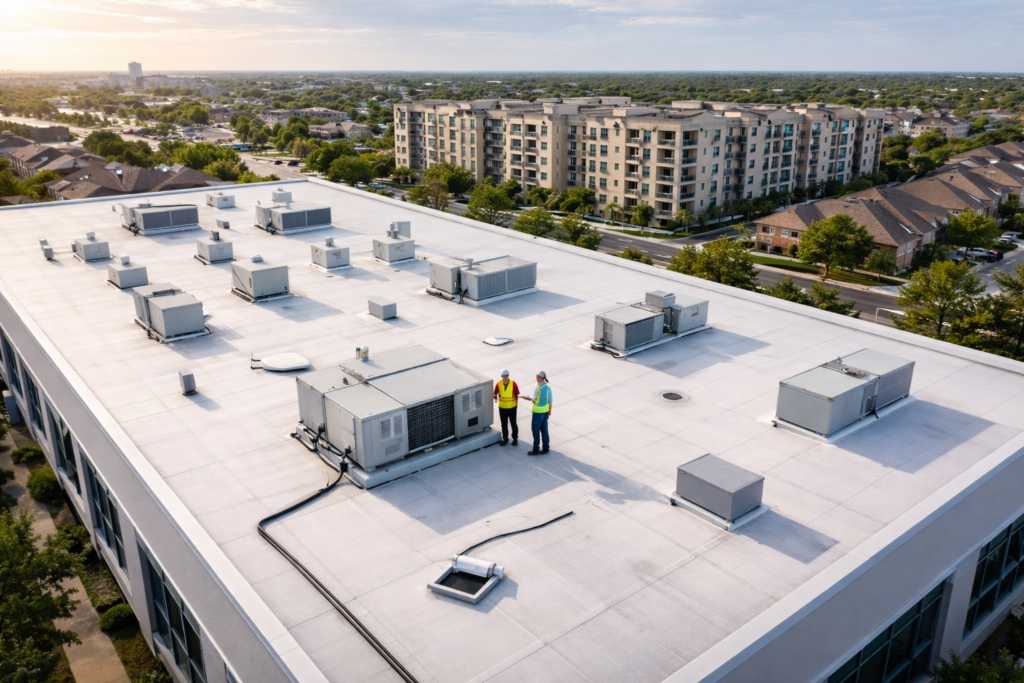
For commercial property owners and facility managers, a roof isn’t just a structure overhead. For commercial and multifamily properties a roof is a longterm asset. Yet one of the most common (and costly) mistakes in commercial property management is waiting until a problem is visible before taking action.
So how often should commercial roofs actually be inspected?
The short answer: more often than most people think.
The longer answer, and the one that protects your budget, tenants, and building, is below.
Why Commercial Roof Inspections Matter
Commercial roofing systems are exposed to constant stress. Between weather, temperature changes, rooftop equipment, foot traffic, and drainage demands, even a well-installed roof can deteriorate quietly over time.
Unlike residential roofs, commercial systems — especially flat or low-slope roofs — often don’t show obvious warning signs until damage has already spread beneath the surface. Small membrane separations, flashing failures, or drainage issues can lead to insulation saturation, interior damage, and costly emergency repairs if they go unnoticed.
Regular inspections are not about finding problems after they happen, they are about preventing problems before they disrupt operations.
The Recommended Inspection Schedule for Commercial Roofs
At a minimum, commercial roofs should be inspected twice a year.
Industry best practices consistently recommend biannual inspections, typically:
- Once in the spring to assess any damage from winter weather and prepare for storm season
- Once in the fall to ensure the roof is ready for colder temperatures, heavy rain, and wind
This schedule allows roofing professionals to identify developing issues early, before heat, moisture, or storms make them worse.
Additional Inspections Should Happen After Specific Events
Beyond routine inspections, commercial roofs should also be evaluated:
- After major storms involving high winds, hail, or heavy rainfall
- After rooftop work such as HVAC installation, repairs, or equipment upgrades
- If the roof is 10-15+ years old, when materials are naturally more vulnerable
- When interior signs appear, such as leaks, ceiling stains, or rising energy costs
Skipping these inspections often leads to damage that is far more expensive to correct later.
How Regional Weather Affects Inspection Frequency
Commercial roofs in the southern U.S. face different challenges than those in colder or drier climates. Properties across Louisiana, Texas, and Arkansas experience a combination of heat, humidity, storms, and seasonal temperature swings that directly impact roof performance
Extended heat and UV exposure can accelerate membrane wear. Heavy rain stresses drainage systems. Strong winds test seams, flashing, and edge details. In some areas, freeze-thaw cycles add another layer of risk.
Because of these conditions, routine inspections are especially important for commercial buildings in this region, even if no major storm damage is visible.
What A Commercial Roof Inspection Should Include
A proper commercial roof inspection goes far beyond a quick walk-through. A thorough inspection evaluates the entire roofing system, including:
Roof membrane or surface condition
Seams, laps, and attachment points
Flashing around penetrations and edges
Drains, scuppers, and gutter systems
Rooftop equipment interfaces (HVAC units, vents, pipes)
Signs of ponding water or improper slope
Evidence of foot traffic damage
Early indicators of moisture intrusion or insulation issues
Inspections should also be documented, with photos and written findings. This documentation is critical for maintenance planning, budgeting, warranty compliance, and insurance purposes.
What Happens When Commercial Roof Inspections Are Skipped?
When commercial roofs are only addressed after leaks appear, the damage is rarely limited to the roofing surface. Moisture can spread into insulation, decking, walls, and interior spaces — creating operational disruptions and expensive repairs.
Common consequences of skipped inspections include:
Emergency repair costs
Shortened roof lifespan
Interior water damage
Tenant complaints or downtime
Complicated insurance claims
Voided manufacturer warranties
In contrast, routine inspections allow issues to be addressed early, often at a fraction of the cost of reactive repairs.
Preventative Inspections V.S. Emergency Repairs
Preventative inspections are predictable, scheduled, and controlled. Emergency repairs are not.
A planned inspection program helps commercial property owners:
Extend the life of their roof
Reduce long-term repair costs
Plan capital expenditures more accurately
Maintain compliance with warranty requirements
Avoid surprise disruptions to tenants or operations
In commercial roofing, prevention is always less expensive than reaction.
Commercial Roof Maintenance Plans: A Smarter Ways To Manage Your Roof
For many commercial and multi-family property owners, remembering to schedule inspections, especially across multiple buildings, can be a challenge. That’s why preventative maintenance plans exist.
At Hodge Roofing, we offer commercial and multifamily roof service plans designed to take the guesswork out of roof care. These plans are built around regular inspections and routine service, so small issues are addressed early, before they have the chance to turn into expensive emergency repairs.
Depending on the plan selected, service agreements may include:
A set number of scheduled roof inspections per year
Routine maintenance and minor repairs
Ongoing documentation of roof condition
Early identification of developing issues
Priority response if unexpected problems arise
Instead of reacting to leaks, damage, or tenant complaints, service plans allow property managers and owners to stay ahead of roof-related issues and better plan maintenance budgets over time.
FAQ’s: Frequently Asked Questions About Commercial Roof Inspections
Flat and low-slope roofs should be inspected at least twice per year, with additional inspections after storms or rooftop equipment work.
1. Do newer commercial roofs still need inspections?
Yes. Even new roofs should be inspected regularly to ensure proper performance, catch installation-related issues early, and maintain warranty coverage.
2. Are inspections required for roof warranties?
Most manufacturer warranties require documented inspections and routine maintenance to remain valid.
3. Can inspections help prevent roof replacement?
In many cases, yes. Early detection and targeted repairs can significantly extend a roof’s service life.
4. Who should perform a commercial roof inspection?
Inspections should be performed by experienced commercial roofing professionals familiar with your roofing system and regional conditions.
Final Thoughts For Property Owners & Manager
Commercial roof inspections aren’t optional. They’re a critical part of responsible property management. Whether you oversee a retail center, warehouse, office building, or multi-family property, regular inspections protect your investment and help avoid costly surprises.
At Hodge Roofing, we provide commercial and multi-family roofing services across Louisiana, Texas, and Arkansas, helping property owners stay ahead of roofing issues through proactive inspections and long-term planning.
If your commercial roof hasn’t been inspected recently, it’s likely time.
